New Heron sketch

I returned to the subject of the Heron to day. I approached this one in two stages. The first photo shows as much as I did at the first sitting – I decided to leave a white space for the Heron rather than working it over the background as I did with the last piece.


Painting of Heron, Stage 1


I completed the sketch when the first layer of paint and ink was completely dry. I also worked in a little more charcoal and some white chalk highlights when the second layer of paint was dry.


Painting of Heron, Stage 2


There is always the danger of overworking a piece that requires careful detail as with the heron in this case, but I am reasonably happy that I haven’t done that here.

Gorse and Hawthorn

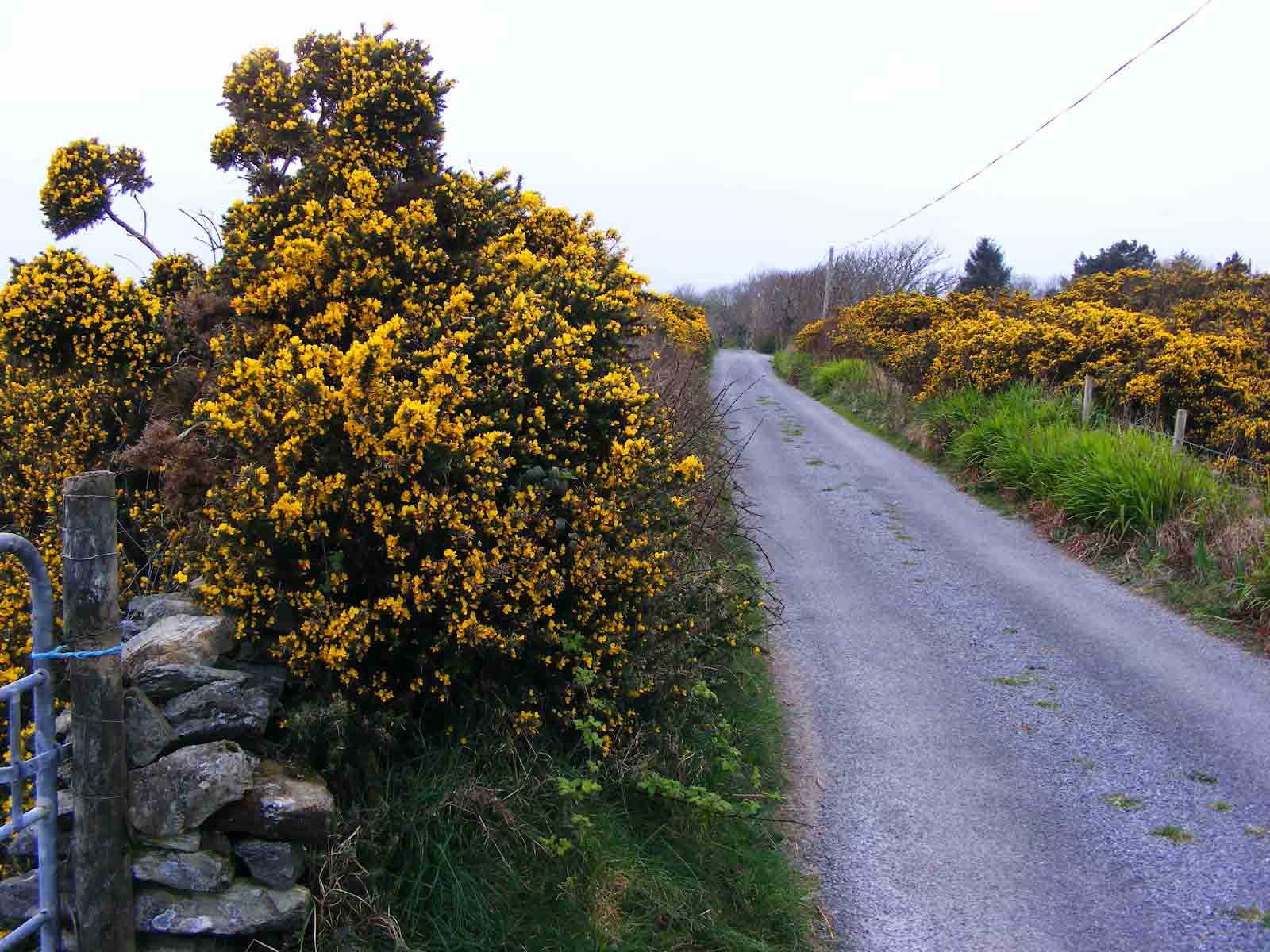
The wild Gorse is one of the most commonly found plants here in Connemara. We are fortunate enough to have a wall of it in our own back garden. The first few blossoms usually appear in February but they arrived soon after Christmas this year, presumably due to the mild weather. These yellow flowers are always a welcome sight after a long colourless Winter. At the moment the gorse is in full bloom everywhere and it is a sight to behold.
Here is a photo I took of a gorse lined road in Ardbear, just outside Clifden.


Gorse in Flower 1


The gorse stems are thorny and evergreen but the flowers smell like coconut, sweet and summery.
Here’s another picture, a little closer up.


Gorse in Flower 2


And just a mention for the Hawthorn – I stopped the car on the way back in to town to photograph this lovely old tree. I love its knarly branches and moss covered trunk.


Photo of a Hawthorn tree

White horses passing by

I took these photographs on my phone last week on Mannin beach which is just south of Clifden. It was the last day of school so my three daughters and I headed for the beach in the afternoon with a picnic. Mannin hosts a hard to rival string of beaches along its coastline near the village of Ballyconneely. We spotted these white horses in the distance when we reached the shore.


White Horses 1


They had spotted us too and lost no time in moving towards us.


White Horses 2


Such a beautiful sight, almost surreal against the backdop of sand and sky.


White Horses 3

Sunshine, beach and Heron in paint

Last week, I spent some time on Ardmore beach, near Clifden and I took some photographs which I blogged about. Over the week end, I returned to these and made some sketches in paint.


Painting of Seascape 1


I used acrylic paint, ink and charcoal here on a heavy acrylic paper. The colours are not strictly true to life but I love this combination of blue and brown and I think the two together look exactly how the sea smells, if that makes any sense at all..


Painting of Seascape 2


The paint is thicker here in places. These sketches are still wet as I photographed them. They were done in one sitting – I might have a look at them again when the paint is dry and make some additions. Here’s one below of the Heron. It is done on a light weight coloured paper.


Painting of Seascape with Heron


I will add some chalk or white pastel to this one when it is dry just where the rocks have bled in to the sea on the top half of the sketch.

Sunshine, the beach and a Heron

The sun has been shining here in Clifden since the week end, the temperature reached 19 degrees in some areas, which is almost unheard of for the month of March. Are we warming up quite literally for a long hot Summer? Others may dispute this but the last really hot Summer that I can remember in Connemara was in 1995. We usually get a mixture of fine days and wet days/weeks, the latter standing out more in my memory for the last couple of years. Let’s hope 2012 will be a good one. There is no place finer than Connemara in good weather, it’s a bit like being in the world’s best holiday destination all Summer long, for free!
To day, I grabbed my camera and drove out to Ardmore beach ( below ), just outside the town, where I took some pictures and was lucky enough to spot a heron.


Photo of a beach


Here it is looking along the shore line. It stood perfectly still for what seemed like a long while.


Photo of a Heron


Here’s a close up. I love the reflection in the water, I’m going to have fun with this in paint..


Photo 2 of a Heron


And then it moved and I noticed a companion in the distance..


Photo 3 of Heron


One last picture looking back up the beach, a glorious day.


Photo 2 of a beach

Sketches in paint 2

These sketches are all based on the same scene, along the coast just outside the village of Claddaghduff, which is about seven or eight miles from Clifden.
In the vein of loose painting, I completed them very quickly (if they can be called complete). One is on a colored paper and the other two are on a heavy acrylic paper.


Painting: Claddaghduff landscape 1


Painting: Claddaghduff landscape 2


Painting: Claddaghduff landscape 3


I enjoy working on a colored ground or paper and it is not quite the same thing as paper that I have colored myself, although I probably need to work on this. Psychologically, one feels more free straight away and I think this usually shows. It has something to do with the daunting hold a blank white sheet of paper has on the mind – it scares us a little. This really should not be the case for someone like myself who has been putting paint on paper since childhood but I do think that it is so.
The other point about these colored papers is that they are very light and not really designed for heavy applications of paint. They tend to buckle especially if larger in size than about A5. This does not bother me especially but may be off putting for a potential buyer/owner of the piece. What is your opinion?

Sketches in paint 1

This photograph of a grouping of trees is not far from Clifden castle, just outside the town. I took it from quite a distance so the image is a little unclear.


Photo of trees


The trees in Connemara are few and far between, mostly Hawthorn which are slow growing and can withstand the harsh weather. They have a tendency to grow in the direction of the prevailing wind as in the photo and appear quite striking. Here’s my sketch below –


Painting of trees


I chose to straighten the tree in this instance but I am making a mental note as I type to return to this subject again soon. It is done on a blank water colour paper, postcard size. I’ve used a little charcoal to highlight the shadows and I’ve allowed the paint to fall down the page where it was thin.

Sea sketches

I made some quick sea sketches in an effort to loosen up my painting and allow it to be more expressive. To this end, I chose coloured paper, acrylic paint, ink, charcoal and large brushes.

The subject matter is the sea, its dangers and its allures. I was thinking specifically about a stretch of sea between an island called ‘Inish Bofin’ (just off the coast at Cleggan, about seven miles from Clifden) and it’s neighbour ‘Inish Shark’.


Sea Sketch 1


Sea Sketch 2


Bofin has a population of about two hundred inhabitants while Shark was abandoned in the 1960’s, due to lack of support from the government of the day and also due to the hazardous waters around it. The two islands once shared life as sisters. The Shark people regularly made the journey over to Bofin, particularly on a Sunday, so that they could attend the church there. The stretch of water and most direct route between the two is known as ‘The Sound’ and is particularly dangerous due to a cross section of currents and shifting sands near the shore. The islanders rarely took this route because of the danger and some of the men that ran the risk, paid for it with their lives.


Map of Inishbofin

http://homepage.eircom.net/~inishbofinisland/map.htm


When looking over to Shark from Bofin, the waters of the Sound sometimes appear almost black and it meets the Bofin shore at a deceptively idyllic beach known as Tra Gheal ( which means bright or silver beach ).


Photo of man looking out across a bay

http://www.inishbofin.com/photo_gallery.html


The island is a tonic for the senses, everywhere you go the sea is just there, the sound, sight and smell of it. There is for me a wavering sense of awe and trepidation about this particular spot as the knowledge of those who perished there unsettles its astounding beauty.

I plan to continue working on a series of sketches about the Sound which may turn in to paintings later.

Loosening up

It takes me a day or two to get in to a painting rhythm once I have broken my routine. I have been looking over some of my work, particularly these sea paintings I did about five months ago. I plan to return to this looser style of working on paper as I can get lots of ideas out quickly and it is a good way to get back to work after a break


Sea Painting 1


Sea Painting 2


Sea Painting 3


These pieces were done on acrylic paper. I used acrylic paint, ink and charcoal and varied the way in which the paint was applied. It is very thick in areas such as in the foreground of the middle piece and thin elsewhere. I like the way the charcoal leaves its mark on the paint and for me it adds darkness and character to these pieces.
I plan to return to this looser style of work and use these materials to bring some expression back to my work.

Victorian garden

It’s back to normal this morning after a long and enjoyable St. Patrick’s weekend with family and friends. It was a typical West of Ireland St. Patrick’s day on Saturday with so much rain that Clifden’s National school band had to cancel their performance.
The weather redeemed itself yesterday however with a Spring like (almost warm) rain free day. Two seasons in as many days, we rain weary Irish know that it is imperative to abandon everything when the weather turns and go outside immediately as it might be some time before it returns!
I spent the day at the gloriously restored Victorian gardens at Kylemore Abbey.


Photo of garden 1


These next photos were taken about a year ago in the garden around Easter. The great thing about visiting Kylemore is that there are new things to enjoy at every time of the year and the garden is always impressive and interesting even if it is not in full bloom.


Photo of garden 2


Photo of garden 3


The Kylemore story is a romantic one. It began when Mitchell Henry visited Kylemore with his wife on their honeymoon in 1852. They stopped at Kylemore Pass and looking over the hillside, Margaret declared that she would love to live in such a beautiful place. Ten years later, Mitchell Henry purchased the site and began to build the castle, model farm, dairy, adjoining gothic church, and walled garden. The entire project took five years and one and a quarter million pounds to build, a staggering sum for the time. The gardens cover six acres and originally contained twenty one glass houses heated by an underground system of piping that was was fueled by a lime kiln furnace. These houses would have contained a variety of tropical fruits and plants collected from around the world. The head gardener lived in a beautiful residence ( picture below ) within the garden walls and the workers resided close by in the modest ‘bothy’.


Photo of garden 4


The Henry’s lived happily on the estate with their nine children for ten years before tradgedy struck with the death of Margaret on a visit to Egypt. She was buried in a Mausoleum on the estate but Mitchell never recovered from her death and could not bear to spend much time at Kylemore. Later, one of Henry’s daughters died when driving a pony trap locally and after that Henry’s empire began to collapse. The Benedictine nuns took over the property in 1920 and still maintain a presence there to day.
I worked at Kylemore when I first came to Connemara, making and decorating pots in the pottery on the estate. It was a fairytale introduction to the place for me and I spent seven years there in total before moving to Clifden, about ten miles away. The Benedictine nuns undertook the restoration of the gardens while I was there, no small task.
I remember visiting the garden in my first year. It had a magical charm then, like The Secret Garden, the children’s novel by Frances Hodgson Burnett. It was out of bounds, wild and completely overgrown behind ancient locked doors.
The garden to day is a tribute to the Benedictine order at Kylemore and all the lay people, gardeners, locals and specialists involved in the massive restoration project. It is a marvel of a place, a surreal and expertly manicured model surrounded by walls, which give way to an untamed backdrop of wild mountains and countryside. It is almost like stepping in to a different world when you pass through the gates and allow yourself to be transported back to a very particular time in the history of this place.