Winter Jasmine

We’ve been away and hence the inactivity here and elsewhere. My family and I have just returned from a culture ( and fun ) soaked trip to London – more about that another time and much work to do here on the painting front. However I pause today to post a photo of my gorgeous Winter Jasmine plant. This was green and unremarkable before we left and now it is a tumble of delicate scented flowers. This is remarkable for me who has failed many times with this garden. Dead plants have often been flung into the hedge by me in a fit of disappointed pique. This little wonder was bought in Lidl two years ago when I was tempted by attractive packaging and the promise of sweet scent but it looked like a small stick. I was pleased when it didn’t die and seemed to settle into our thin and loamy soil. This year I attempted to train it up the side of the hen coop by tucking little sprigs into the wire and low and behold it took off!

I think our hens are very pleased with their new surroundings – might even make for tastier eggs..


My Winter Jasmine plant

Clifden Nature Studies

Cover image Wildflowers by Caroline Conneely 

( Caroline is a first year student in Clifden Community School and she was presented with a prize for this photograph by Clifden Library this September )


I recently attended a meeting in Clifden Library about ‘Biodiversity’ in our town which was co-ordinated by Clifden Tidy Towns and local environmentalist Marie Louise Heffernan. Marie Louise and I have been friends for many years so I wanted to offer my support and learn a little more about this thing called Biodiversity. So what is it you may well ask? As it turns out, it is a topic that is more than a little close to my heart because in the simplest of terms Biodiversity means our natural world and how we fit into it. I would have known it as ‘Nature Studies’ when I was in school and I remember it as a subject that was given a lot of importance.


Photo 2 of Bog Cotton

Bog Cotton by Deborah Watkins


Sandra Shattock from the Tidy Towns began the meeting by introducing Brendan O’Malley who spoke about Biodiversity from his point of view, as a farmer working in the area. Brendan talked about recognising the importance of the natural world around us, whether it is a field or a seashore or a roadside. He spoke about the variety of wild plants and grasses on our doorstep that might be overlooked as weeds but which thrive when allowed to do so, without human interference. He also spoke about finding a balance between making a living from the land and respecting it, perhaps returning to an older kind of husbandry which is kinder to nature.


purple 1

Gowlaun Lake, Clifden by Deborah Watkins


Marie Louise followed with an outline of a proposed schedule of events which will contribute to the production of a Biodiversity Plan for Clifden. The idea is that people will start to engage each other on the subject and question what can be done in our town to best preserve and maintain the natural world. In this way, the process will become an interactive one where all ideas are welcomed and considered. You can get involved by joining some of the many activities over the next few weeks. There’s something for everyone and the events are spread over mornings and evenings with talks on garden bird identification, mammal tracking and even a bat walk! You can find out more information on Marie Louise’s website at www.aster.ie


Keelin Kennedy – Painting with Thread

Cover image ‘Mountain Scene’ by Keelin Kennedy


I wrote this piece for our local newspaper the Connemara Journal a few weeks ago –

Keelin Kennedy is a visual artist and a native of Connemara. She is also a therapist, having almost finished an intensive three year course in Art Therapy. The strong practical element of this course has meant that Keelin has been able to continue and develop her own work throughout her studies. The quality that makes Keelins art unique in my view is the way in which she combines different materials to convey her subject.


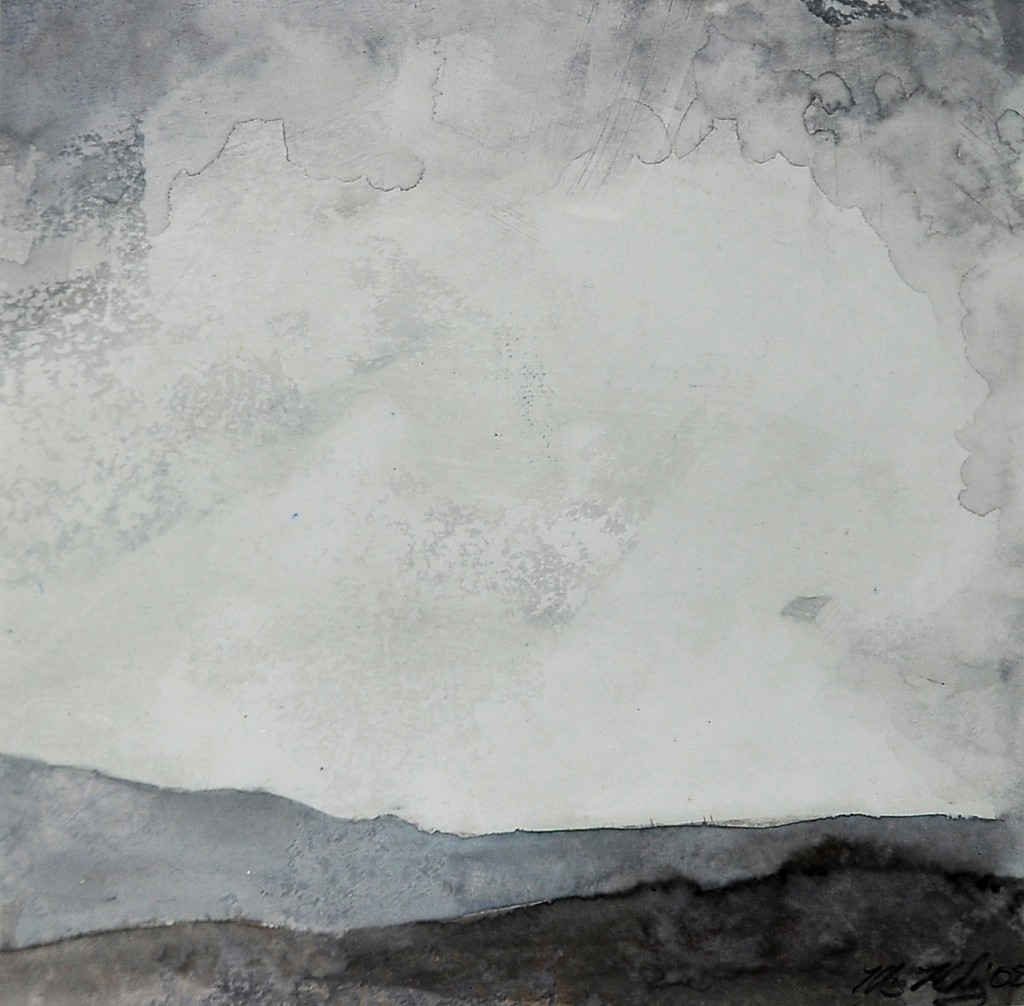
Foggy Day by Keelin Kennedy

‘Foggy Day’ by Keelin Kennedy


When I studied art ( a long time ago ) there was a perceived divide between the disciplines of fine art ( painting, printmaking and sculpture ) and  craft design ( ceramics, metalwork, glass work and embroidery ). Fine art painting was considered to be a higher cause, attracting artists who ‘had something to say’ as opposed to the craft subjects which were often perceived as the option to take if you didn’t get accepted into painting. Of course this is utter nonsense and it vexes me now just to think about it.

Keelins work seems to effortlessly combine the separate skills of painting and embroidery. She manages to blend paint and thread seamlessly in her delicate and subtle depictions of the Connemara landscape with all it’s contradictions and nuances, it’s fierceness and it’s muted beauty. The landscape is Keelins main concern but she is also interested in abstraction so there is often a playfulness about the way her paintings are composed. She draws her inspiration from her surroundings but she often allows her materials to direct the work – objects and textiles that she has collected become starting points or are incorporated into a painting. Keelin works from a studio in her own home but says that she often ends up working on the kitchen table when her desk becomes too cluttered.


'Untitled' by Keelin Kennedy


Keelin enjoys reading fairytales and watching films with an element of fantasy and magic, she mentions Wes Anderson’s ‘Moonrise Kingdom’ and Matthew Vaughan’s ‘Stardust’. The beguiling and sometimes hynotic nature of  fairytale is a quality that is very present in her work in my view.

When I ask Keelin what advice she would give to an aspiring artist, she tells me that art is something that she has always wanted to do, in spite of what others have advised her in the past. ‘Never stop playing and experimenting’ she says – it is this kind of openness to learning and creativity that inspires great work.

You can read more about Keelin and view her work at www.connemaraartlink.com


Keelin Kennedy


Return to Painting

Cover image ‘The Green Road, Inishbofin’ by R. Byrne


It’s been a great Summer and a busy one mainly due to my temporary job in the Elm Tree centre, a local mental health clinic. The Elm Tree is a truly wonderful place to work and a very special environment where staff and clients are respected and appreciated equally and where the well being of the people who attend is paramount. While I was there I cooked dinner ( for twenty to twenty five people ) during the mornings and for two afternoons a week we crafted, sewed and painted together. I enjoyed every minute of the time I spent there and I’m glad that I’ll be able to see some of the staff and people from time to time as the centre is very close to where I live.

I spent most afternoons during the Summer with my three daughters during their long school holiday, trying to balance a mixture of fun, outings, play dates and plain old rest. Now I find myself at home again with the Winter stretching out ahead and with some real time on my hands. The kids are back in school so I have my precious mornings to paint, something I haven’t been able to do since May. As luck would have it, I received an email about a painting commission just after my contract came to an end, so I’ve got an exciting project to tackle straight away.

The subject is Inishbofin ( just off the coast at Cleggan about seven miles from here ) and I’m starting with the Green Road on the West quarter of the island. It’s a spot I know very well, a stunning blend of hill, rock and heart stopping cliffs. I remember being told about how special the islands are before I visited them for the first time. It doesn’t take long to figure this out once you go – it’s like an assault on the senses. The sea is so powerfully present everywhere, the sound of it, the sight of it at every turn, the smell of it and the taste of it in the air, quite a heady thing.

My first step is to do some loosening up as it’s been a while, so I’m starting with some small sketches. I’m using the photo above for reference .


Sketches


I need to work out the composition  – what is important, what is not. I decide that the cliff in the background is where the eye should be led as it is the destination of this Green road and the most dramatic part of the island. I want to heighten it a little to make it stand out. I’m changing the horizon line also, to make the sea peak out at the other side of the cliff. This ‘being surrounded’ by water is very important  for the finished painting and I feel that it is lacking in the photo where it looks more like a piece in a jigsaw puzzle.


Composition sketches


So far, this little sketch seems closest to how I want the painting to look – plenty of movement in the landscape and lots of bright colour – but I’m conscious that I’ve lost the sharp incline to the right in this one. I may push the whole image to the left in the next few sketches so I can suggest this better. It’s a start but there’s more work to do before I start painting on canvas..


Sketch of the Green Road


Summer Break

Cover image taken from ShopHomeGrown at www.etsy.com


Two weeks ago, I got a temporary job offer that could not be refused and now the position has been extended over the Summer months. I’m working in the Elm Tree Centre here in Clifden which is a mental health clinic that serves the greater Connemara region. I absolutely love this job which is a mixture of teaching and cooking ( lots of cooking! ) as well as handcrafts and art. It’s a real privilege to work in such a vital part of our community and I am very grateful for the opportunity to be there for a while.

However, as there are only so many hours in the day, I will be taking a break from painting and blogging until the end of the Summer. If you are interested in my work, you can view it here on this site or in our gallery – the Lavelle Art Gallery where there are a large number of pieces available. You can follow all our latest news on our Facebook page.

You’ll know when I’m back if you’ve subscribed, as you’ll get an email as soon as I publish a post. I might even get the chance to write a bit before then but until that happens, I want to thank you for following and wish you all the best for the Summer ahead.


Deborah

Island Paintings

I’ve begun a series of small paintings based on my trip to Inishturk and Caher island recently. It was such a thrill for me to have the perspective of the islands from the sea – all that blue/black/green in the foreground with a gorgeous slice of land in the middle of it all. I decided to work small and quickly rather than give myself the pressure of a large canvas so I chose acrylic paper, small pieces – 3″ x 4″ and 5″ x 7″

I prepared several sheets with a wash of blue and white.


Stage one of island paintings


Next I outlined some rough compositions and I used acrylic paste for texture.


Stage two of island paintings


Once the paste was dry, I went in with lots of colour – some charcoal first for the cliffs. I used paint and ink applied thickly and thinly in turn to maximise the effects that these two materials bring when used together. I worked quickly and back and forth between several pieces. The one in the cover photo ( also below ) was the last piece I worked on. I think it works best because I had figured out what I was doing by this stage. This is what it looked like when wet below.


Inishturk from the sea by Deborah Watkins


Here is the same piece when dry – the paint has settled so the textures are clearer. The colours will brighten when I coat the surface with an acrylic varnish later, which will not effect the texture.


Finished Island painting


Here’s another piece – the first photograph below shows what it looked like when wet.


Small Turk painting by Deborah Watkins


The same piece when dry below.


Finished Island painting


I’ll be taking a break from painting and blogging soon as I have a job for the Summer months which I have already started. I’ll post more about that in a little while..


Puffins

Cover photo by Aoife Herriott


We saw a large flock of Puffins while on Inishturk last week. They were congregating around one of the cliff faces where we stopped to admire them. We lay down on the grass at the top edge of the cliff to watch them swoop below us which was more than a little hair raising! My camera didn’t pick up the images very well but fortunately there were a couple of professional photographers in the group, among them Aoife Herriot who was kind enough to share her pictures with me.


Puffins by Aoife Herriott

 Puffins on Inishturk by Aoife Herriott


The cliff face was lush with growth,  grasses and a beautiful plant called Samphire which is very clear in this photo above. It was prolific in this particular spot and the leaves and delicate flower are edible.

These next photo also taken by Aoife, is of a Fulmer which is a seabird that looks rather like a gull but is in fact related to the Albatross. They breed on the cliffs here – we were mesmerised watching them swoop in and out of the rock face alongside the puffins.


Fulmers on Inishturk by Aoife Herriott

 Fulmer at Inishturk by Aoife Herriott


You can see more of Aoifes work on her website at www.aoifeherriott.com and at www.connemaraartlink.com

Inishturk

I joined a group led by Clifden archaeologist Michael Gibbons on a trip to Inish Turk and Caher Island this week. We set out from Cleggan harbour at 9.30am and headed for Caher island first, north east of Turk. It is tiny, uninhabited and difficult to access. The remains of an early Christian monastery survive on the island which is an ancient pilgrimage place and is still visited for this purpose today.


Map of the islands - Turk and Caher

Map of Inishturk and Caher Island 


Unfortunately, we were unable to land on the island as there was quite a big swell even though the day was warm and calm. This was what we saw as we approached – the water was deceptively still, almost black and oily in appearance but it rose up suddenly in bursts which crashed heavily on the rocks at the shoreline.


Caher island just offshore


We turned around then and made our way back to Inishturk, stopping first to marvel at the base of these cliffs – a rupture of black basalt and granite. The light was incredible – it sparkled off the water and diffused as it rose, trapped in the black curve of rock which rises sharply from the water. I wish my photography skills were a bit better – this is my best picture.


Cliffs at Inishturk from the sea


We travelled over to the pretty harbour of Portdoon next ( cover photo ) where we disembarked and started our hike. The island is 5km long by 2.5km wide and we covered a good deal of it in the five or six hours we spent there. The landscape is an eye popping mix of undulating hills and valleys with ancient walls and field systems and dramatic cliff top walks. There’s a spectacular view of the Twelve Bens mountain range in this next one.


turk 1


The diamond shaped hill in the centre distance ( below ) is Croagh Patrick, an important pilgrimage mountain in county Mayo.


The landscape at Inishturk


Me in hiking mode below.


Photo of me in hiking mode


These sea stacks are known in Irish as ‘Buachaill mor’ and ‘Buachail beag’ ( Big boy and small boy ). The cliff views were spectacular and a little scary.


Inishturk cliffs viewed from the island


This next one is known locally as the sphynx – an incredible natural sculpture.


sea stacks at Inishturk


As we completed the loop back to Portdoon, we began to hear the sound of the sheep and their new lambs which dotted this part of the island – they were very willing to pose for photos..


Sheep on Inishturk


Lamb at Inishturk


Lastly, I stopped to take a picture of the post office which also operates as a Bed and Breakfast.

Every single islander we met along the way greeted us warmly and stopped for a chat. I was struck by the thought of living among such a small close community – just forty inhabitants today. This island is less known and travelled compared to it’s neighbours Inishbofin and Clare Island which attract large numbers of tourists in the Summer, but it is no less beautiful. I hope to make a return visit before the end of the Summer.


Inishturk post office

Interview with Rosie McGurran

Cover image ‘The Black faced lamb’ by Rosie McGurran


Rosie McGurran is a painter who lives and works in the village of Roundstone in Connemara. Originally from Belfast, Rosie studied fine art at the University of Ulster. She has received many awards including the Conor prize for figurative painting at the Royal Ulster Academy of which she is now a member. Rosie has her own gallery in Roundstone ‘The Northern Star.’ I met up with her recently to talk about her work and her practices.


Why did you decide to live in Roundstone?

I was always fascinated by the light and landscape of Roundstone. I was invited to the Arts Week residency in 2000 and I decided to stay to see what it was like in the Winter.  Twelve years later and I’m still here. I was also aware of the legacy of all the artists who had spent time in Roundstone in the past and I wanted to find out more.


What are your favourite subjects? What do you paint?

My main focus in on people, I like to tell stories in the work and set the figures in the local landscape like a parallel world that we can’t see all the time.


'Blue faced doll' by Rosie McGurran

 ‘Blue faced doll’ by Rosie McGurran


Where do you get your inspiration? What other artists have influenced you?

When I was at art college I was primarily interested in painting the human figure, I also had a strong idea that I wanted to create a figurative language that was not quite literal or totally realistic. I was influenced by Stanley Spencer at that time and the Glasgow painters of the 80’s/90’s.


Do you see your work as autobiographical at all?

There is a definite autobiographical thread to my work. I use elements of things I see every day. Sometimes I have a very strong idea of what it means, sometimes I have no idea. I think it is important for me not to over explain the work as the act of making it is explanation enough.


Photo of Rosie

 Rosie with one of her paintings


What mediums do you use?

I work in acrylic on canvas, pastel, watercolour and charcoal, not all at once though. I love drawing – it is my favourite way of working. I always work on a dark surface, I paint on a very dark red canvas, it makes the colours more vibrant. When drawing, I work on brown paper – I enjoy drawing the images out of the darkness.


What themes crop up in your work? Do these themes re-occur?

Recent recurring themes would be the sea and the landscape, water has always been a strong theme. I love the sea and I don’t like being away from it.


'Spring - Inishlacken' by Rosie McGurran

‘Spring Inishlacken’ by Rosie McGurran 


What are you reading, looking at or listening to at the moment to feed your work?

I have just finished reading ‘Art in America’ by Ron McLarty – it is a hilarious story about an unpublished writer who ends up in the depths of the Mid-West trying to write a play. I listen to BBC Radio 4 constantly – I enjoy the arts coverage and the documentaries and plays. I saw a lot of art recently in New York and I went to see the Government collection in the Ulster Museum in Belfast last week. That was an amazing exhibition, a mixture of traditional painting and contemporary art – it was probably one of the most inspirational shows I have seen.


Where do you work and how do you make the space work for you?

I work in my studio at home, it is very private and the phone doesn’t work so I can really shut myself away. I need plenty of space and I use a large piece of glass as a palette and set out the colours in sequence. When I finish a body of work I scrub down the palette to start again fresh.


What are you working on at the moment? Are you involved in any upcoming shows or events?

At present I am working towards an exhibition with Gavin Lavelle for Bog Week in Letterfrack. I will also be showing in Clifden Arts Week. I am hosting an exhibition by Margared Iriwin as part of the Bealtaine Festival in May. Also I will be holding the Inishlacken Project residency in June. In November I am going to Rome to spend six weeks preparing a solo exhibition.


What is the best piece of advice you have been given? What advice would you give to an aspiring painter?

The best piece of advice I was given – someone once told me if you don’t get out of bed in the morning and go in to your studio no one will care. It is your own personal responsibility to make the work and I would tell any aspiring artist that.


Colour

It’s the last week in April and we are only just beginning to see some Springtime colour here in Connemara. The yellow gorse flower is bursting into bloom, a little more each day although it is almost alone – you can see the extent of the brown scrub still in this photo below. The hedgerows and landscape are just starting to turn and the few trees in our garden are not in leaf yet. We’ve had a lot of rain over the past few days however so I’m waiting for a rush of green and colour anytime soon..


Photo of gorse bush


Here’s some more images of the gorse.


Photo of gorse by Deborah Watk


Another photo of gorse