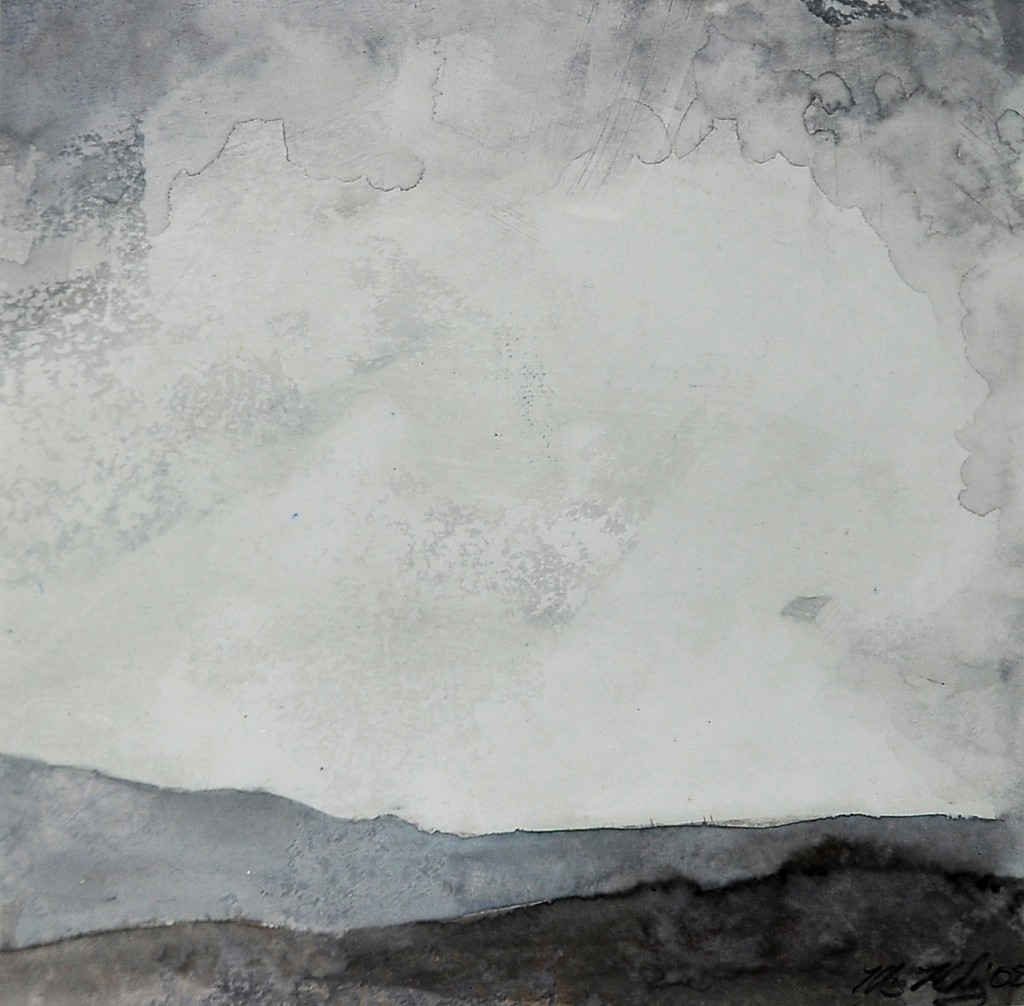
Mannin Beach

I made a trip to Ballyconneely last week, a short drive south of Clifden. I brought my camera and made a quick detour to Mannin as the weather was so good. I normally associate the end of November with a certain gloom – receding light, rain and bitter cold but here we are, into December and still there are clear bright days. There was real warmth in the sun on this morning and the sea was calm and inviting and empty, except for a few bird tracks in the damp sand. Here’s the approach from the field below – the mossy grass is still vivid and bright. It’s deliciously spongy underfoot, feels a bit like an expensive carpet.


Mannin beach - the approach


The Twelve Bens mountain range is clear in this one.


Mannin beach from the approaching field


Here’s the cover photo again. There was hardly a breath in the air – the water was completely still and a perfect mirror for the pastel sky. All this blue seems infused with pink.


Beach at Mannin


A last look down the beach.


Mannin beach

Land of Weather

Cover image ‘Land of Weather’ by Karinna Gomez


(This piece features in the December edition of the Connemara Journal.)


About  a year ago, I bought two etchings by an artist called Karinna Gomez. Karinna is from Fairbanks, Alaska in the United States. She makes small series of prints – mezzotints, woodcuts and etchings, sometimes hand coloured with water colours. To my shame, these prints were only recently taken out of their packaging and given the frames they deserve.  Now that they have pride of place in my home I can honestly say that I take pleasure from them every single day.

There is something wonderfully mysterious about this icy place, so isolated and exposed, it reminds me a little of Connemara. I love the contrast between the white hills and valley and the dark central group of trees, lit by red and orange speckles. These are ‘persimmons’ – an orange red fruit that grows on the ebony tree and which can tolerate and adapt to a wide range of climates, including harsh northern weather. They beam like tiny beacons in this wonderful scene and seem to me to be symbols of hope and optimism which is perhaps fitting as we reach the end of another year.


Persimmons in the snow

 ‘Persimmons in the Snow’ by Karinna Gomez


December is a good time for reflection and I feel grateful to be able to say that I have had a rich and fulfilling year. I thank God too that my family are all in good health. I know that this is not so for everyone and  I think of some of my closest friends especially who have had a difficult twelve months for different reasons. Whatever our circumstances, I think it is part of the human condition to look forward to the coming year with hopefulness and expectation. These are some of the thoughts which I have brought to this poem below as a kind of homage to this beautiful etching.


Land of Weather

after the etching ‘Land of Weather’ by Karinna Gomez


A

star

looks down

on that snowy

mountainscape.

It is so cold there,

wild abandoned place.

Vastness and silence stretch

sharply over snow and ice,

empty hills retreat into fathomless black.

Billow of cloud rushed by a northern breeze,

braced in the heart – a startle of persimmon trees.


Survivors huddle together.

Nest of tangled debris,

silver twigs, tiers

of frozen leaves,

scattered boughs.

Berries pulse a blood red tint,

flashes of gold flood

the moonless night –


Yearnings

of an earth bound

constellation.


Deborah Watkins


If you would like to see some more of Karinna’s work, you can visit her shop at www.etsy.com  – type KarinnaGomez in the search box. Her works are for sale at remarkably low prices, so why not treat yourself or a loved one to something special.


November Landscapes

Cover image – ‘November Pool’ by Deborah Watkins


These landscapes were worked together. They are all done on 5″ x 7″ heavyweight acrylic paper. The one above is based on a view of the Twelve Bens mountain range from the Roundstone Bog Road. I’ve kept the mountains sketchy and light to make them recede a little and I’ve used lots of thick paint and ink in the foreground to describe the grasses and this large pool. I didn’t take photographs during the process  – they were worked quickly and sometimes I find that stopping to take images interrupts the session too much.

I’ve called this one below ‘November Red’ – the colour of the bog has been exaggerated but the contrast between the paleness of the grasses and the peat itself is there.


November Red by Deborah Watkins

‘November Red’ by Deborah Watkins


This next painting was also worked quickly – I’ve used large brushes for the foreground and smaller ones to describe the hills behind. It’s evening so the colours are all quite dark. I’ve attempted to heighten the drama with this dark cloud shape that mirrors the swirling lines of the bog.


November Landscape by Deborah Watkins

‘November Evening’ by Deborah Watkins


A little too much colour for November? Perhaps, but is is all fading now and quickly so maybe I’m just taking stock..


Black bog, blue hills

I’ve been working on some small paintings this week ( 5″ x 7″ ) – I really enjoy painting on this scale as I can get results quickly. It’s not just the speed factor though ( impatient as I am ) it’s the ability to make a better response to the landscape. At the moment I find this more difficult with larger work – covering the canvas takes longer so the response is less immediate. I believe that smaller works and drawings often have an energy about them that is lost in larger work. I would love to scale up in the future and get better at making bigger paintings – a bigger space, bigger brushes, more paint – it’s good to think about the possibilities. For now small is good for me.

The composition here is based on a favourite spot of mine near Oughterard. When I drive past, I want to stop the car and get out and just take it all in. Sometimes I do but it’s not always possible and it is a very fast stretch of road.

This is how this piece started out below. I’ve used large brushes and lots of colour, a little charcoal too.


First stage of painting


Here’s the next stage. I’ve played with different consistencies of paint – thick and thin layers over each other. I’ve used a sepia ink to describe the bog which is almost black at the moment. I allowed the paint to dry before continuing.


Second stage of painting


Once this first layer was dry, I used smaller brushes to add spots of colour – some green in the foreground and more red and blue on the hills behind – a little more definition overall.


Oughterard Bog


Happy with this one now and eager to do some more..

Sea Paintings

While I’ve been busy with the The Green Way painting, I’ve also been working on some small seascapes for the annual ‘Sea Week’ festival due to open shortly in Letterfrack. The theme this year is ‘A Memory of the Sea’.

These are done on 4″ x 4″ canvas which I enjoy using – small paintings enable a certain boldness that is not always possible ( for me ) on a larger scale. The painting above was inspired by some photos I took when I visited Inishturk this Summer, I’ve exaggerated the wildness of the sea which was relatively calm at the time although not quite calm enough for my feeble constitution as I discovered..


This next painting below is called ‘Ebb Tide’ and is drawn from memory.


Ebb Tide by Deborah Watkins


I used acrylic paint and inks with both of these and I added charcoal to the ‘Sea Cliffs’ piece once the paint was dry.  These photos were taken before varnishing so the finished pieces will appear richer.

Keelin Kennedy – Painting with Thread

Cover image ‘Mountain Scene’ by Keelin Kennedy


I wrote this piece for our local newspaper the Connemara Journal a few weeks ago –

Keelin Kennedy is a visual artist and a native of Connemara. She is also a therapist, having almost finished an intensive three year course in Art Therapy. The strong practical element of this course has meant that Keelin has been able to continue and develop her own work throughout her studies. The quality that makes Keelins art unique in my view is the way in which she combines different materials to convey her subject.


Foggy Day by Keelin Kennedy

‘Foggy Day’ by Keelin Kennedy


When I studied art ( a long time ago ) there was a perceived divide between the disciplines of fine art ( painting, printmaking and sculpture ) and  craft design ( ceramics, metalwork, glass work and embroidery ). Fine art painting was considered to be a higher cause, attracting artists who ‘had something to say’ as opposed to the craft subjects which were often perceived as the option to take if you didn’t get accepted into painting. Of course this is utter nonsense and it vexes me now just to think about it.

Keelins work seems to effortlessly combine the separate skills of painting and embroidery. She manages to blend paint and thread seamlessly in her delicate and subtle depictions of the Connemara landscape with all it’s contradictions and nuances, it’s fierceness and it’s muted beauty. The landscape is Keelins main concern but she is also interested in abstraction so there is often a playfulness about the way her paintings are composed. She draws her inspiration from her surroundings but she often allows her materials to direct the work – objects and textiles that she has collected become starting points or are incorporated into a painting. Keelin works from a studio in her own home but says that she often ends up working on the kitchen table when her desk becomes too cluttered.


'Untitled' by Keelin Kennedy


Keelin enjoys reading fairytales and watching films with an element of fantasy and magic, she mentions Wes Anderson’s ‘Moonrise Kingdom’ and Matthew Vaughan’s ‘Stardust’. The beguiling and sometimes hynotic nature of  fairytale is a quality that is very present in her work in my view.

When I ask Keelin what advice she would give to an aspiring artist, she tells me that art is something that she has always wanted to do, in spite of what others have advised her in the past. ‘Never stop playing and experimenting’ she says – it is this kind of openness to learning and creativity that inspires great work.

You can read more about Keelin and view her work at www.connemaraartlink.com


Keelin Kennedy


Return to Painting

Cover image ‘The Green Road, Inishbofin’ by R. Byrne


It’s been a great Summer and a busy one mainly due to my temporary job in the Elm Tree centre, a local mental health clinic. The Elm Tree is a truly wonderful place to work and a very special environment where staff and clients are respected and appreciated equally and where the well being of the people who attend is paramount. While I was there I cooked dinner ( for twenty to twenty five people ) during the mornings and for two afternoons a week we crafted, sewed and painted together. I enjoyed every minute of the time I spent there and I’m glad that I’ll be able to see some of the staff and people from time to time as the centre is very close to where I live.

I spent most afternoons during the Summer with my three daughters during their long school holiday, trying to balance a mixture of fun, outings, play dates and plain old rest. Now I find myself at home again with the Winter stretching out ahead and with some real time on my hands. The kids are back in school so I have my precious mornings to paint, something I haven’t been able to do since May. As luck would have it, I received an email about a painting commission just after my contract came to an end, so I’ve got an exciting project to tackle straight away.

The subject is Inishbofin ( just off the coast at Cleggan about seven miles from here ) and I’m starting with the Green Road on the West quarter of the island. It’s a spot I know very well, a stunning blend of hill, rock and heart stopping cliffs. I remember being told about how special the islands are before I visited them for the first time. It doesn’t take long to figure this out once you go – it’s like an assault on the senses. The sea is so powerfully present everywhere, the sound of it, the sight of it at every turn, the smell of it and the taste of it in the air, quite a heady thing.

My first step is to do some loosening up as it’s been a while, so I’m starting with some small sketches. I’m using the photo above for reference .


Sketches


I need to work out the composition  – what is important, what is not. I decide that the cliff in the background is where the eye should be led as it is the destination of this Green road and the most dramatic part of the island. I want to heighten it a little to make it stand out. I’m changing the horizon line also, to make the sea peak out at the other side of the cliff. This ‘being surrounded’ by water is very important  for the finished painting and I feel that it is lacking in the photo where it looks more like a piece in a jigsaw puzzle.


Composition sketches


So far, this little sketch seems closest to how I want the painting to look – plenty of movement in the landscape and lots of bright colour – but I’m conscious that I’ve lost the sharp incline to the right in this one. I may push the whole image to the left in the next few sketches so I can suggest this better. It’s a start but there’s more work to do before I start painting on canvas..


Sketch of the Green Road


Island Paintings

I’ve begun a series of small paintings based on my trip to Inishturk and Caher island recently. It was such a thrill for me to have the perspective of the islands from the sea – all that blue/black/green in the foreground with a gorgeous slice of land in the middle of it all. I decided to work small and quickly rather than give myself the pressure of a large canvas so I chose acrylic paper, small pieces – 3″ x 4″ and 5″ x 7″

I prepared several sheets with a wash of blue and white.


Stage one of island paintings


Next I outlined some rough compositions and I used acrylic paste for texture.


Stage two of island paintings


Once the paste was dry, I went in with lots of colour – some charcoal first for the cliffs. I used paint and ink applied thickly and thinly in turn to maximise the effects that these two materials bring when used together. I worked quickly and back and forth between several pieces. The one in the cover photo ( also below ) was the last piece I worked on. I think it works best because I had figured out what I was doing by this stage. This is what it looked like when wet below.


Inishturk from the sea by Deborah Watkins


Here is the same piece when dry – the paint has settled so the textures are clearer. The colours will brighten when I coat the surface with an acrylic varnish later, which will not effect the texture.


Finished Island painting


Here’s another piece – the first photograph below shows what it looked like when wet.


Small Turk painting by Deborah Watkins


The same piece when dry below.


Finished Island painting


I’ll be taking a break from painting and blogging soon as I have a job for the Summer months which I have already started. I’ll post more about that in a little while..


Interview with Rosie McGurran

Cover image ‘The Black faced lamb’ by Rosie McGurran


Rosie McGurran is a painter who lives and works in the village of Roundstone in Connemara. Originally from Belfast, Rosie studied fine art at the University of Ulster. She has received many awards including the Conor prize for figurative painting at the Royal Ulster Academy of which she is now a member. Rosie has her own gallery in Roundstone ‘The Northern Star.’ I met up with her recently to talk about her work and her practices.


Why did you decide to live in Roundstone?

I was always fascinated by the light and landscape of Roundstone. I was invited to the Arts Week residency in 2000 and I decided to stay to see what it was like in the Winter.  Twelve years later and I’m still here. I was also aware of the legacy of all the artists who had spent time in Roundstone in the past and I wanted to find out more.


What are your favourite subjects? What do you paint?

My main focus in on people, I like to tell stories in the work and set the figures in the local landscape like a parallel world that we can’t see all the time.


'Blue faced doll' by Rosie McGurran

 ‘Blue faced doll’ by Rosie McGurran


Where do you get your inspiration? What other artists have influenced you?

When I was at art college I was primarily interested in painting the human figure, I also had a strong idea that I wanted to create a figurative language that was not quite literal or totally realistic. I was influenced by Stanley Spencer at that time and the Glasgow painters of the 80’s/90’s.


Do you see your work as autobiographical at all?

There is a definite autobiographical thread to my work. I use elements of things I see every day. Sometimes I have a very strong idea of what it means, sometimes I have no idea. I think it is important for me not to over explain the work as the act of making it is explanation enough.


Photo of Rosie

 Rosie with one of her paintings


What mediums do you use?

I work in acrylic on canvas, pastel, watercolour and charcoal, not all at once though. I love drawing – it is my favourite way of working. I always work on a dark surface, I paint on a very dark red canvas, it makes the colours more vibrant. When drawing, I work on brown paper – I enjoy drawing the images out of the darkness.


What themes crop up in your work? Do these themes re-occur?

Recent recurring themes would be the sea and the landscape, water has always been a strong theme. I love the sea and I don’t like being away from it.


'Spring - Inishlacken' by Rosie McGurran

‘Spring Inishlacken’ by Rosie McGurran 


What are you reading, looking at or listening to at the moment to feed your work?

I have just finished reading ‘Art in America’ by Ron McLarty – it is a hilarious story about an unpublished writer who ends up in the depths of the Mid-West trying to write a play. I listen to BBC Radio 4 constantly – I enjoy the arts coverage and the documentaries and plays. I saw a lot of art recently in New York and I went to see the Government collection in the Ulster Museum in Belfast last week. That was an amazing exhibition, a mixture of traditional painting and contemporary art – it was probably one of the most inspirational shows I have seen.


Where do you work and how do you make the space work for you?

I work in my studio at home, it is very private and the phone doesn’t work so I can really shut myself away. I need plenty of space and I use a large piece of glass as a palette and set out the colours in sequence. When I finish a body of work I scrub down the palette to start again fresh.


What are you working on at the moment? Are you involved in any upcoming shows or events?

At present I am working towards an exhibition with Gavin Lavelle for Bog Week in Letterfrack. I will also be showing in Clifden Arts Week. I am hosting an exhibition by Margared Iriwin as part of the Bealtaine Festival in May. Also I will be holding the Inishlacken Project residency in June. In November I am going to Rome to spend six weeks preparing a solo exhibition.


What is the best piece of advice you have been given? What advice would you give to an aspiring painter?

The best piece of advice I was given – someone once told me if you don’t get out of bed in the morning and go in to your studio no one will care. It is your own personal responsibility to make the work and I would tell any aspiring artist that.


Colour

It’s the last week in April and we are only just beginning to see some Springtime colour here in Connemara. The yellow gorse flower is bursting into bloom, a little more each day although it is almost alone – you can see the extent of the brown scrub still in this photo below. The hedgerows and landscape are just starting to turn and the few trees in our garden are not in leaf yet. We’ve had a lot of rain over the past few days however so I’m waiting for a rush of green and colour anytime soon..


Photo of gorse bush


Here’s some more images of the gorse.


Photo of gorse by Deborah Watk


Another photo of gorse